


When your best friend is hurting, you want to help. And although it's easy to either take a Tylenol, chew a Tums, or pop a cough drop when you're not feeling well, it's not as easy to know how to help a dog who needs pain relief. Here's what you can do for dog in pain:
Recognizing a Dog in Distress
Some breeds will let you know that something isn't right–through actions like yipping, barking, or acting panicked in general. Most dogs handle it almost stoically, though, not letting on that they're in pain. They may be completely unable to tell you they're in distress. Luckily, there are signs a dog isn't feeling well. Subtle signs of a dog in pain include:
- A change in energy level: low energy, or, conversely, unable to sit still
- Seeming socially withdrawn
- Changes in breathing (usually panting or breathing faster and shallower than normal)
- Loss of appetite and less water intake
- Constantly grooming a specific area on themselves
- Increased heart rate
- Biting, growling, or whining when picked up
- A change in mobility (suddenly refusing to climb stairs)
Just remember the signs of an unwell pup might only be noticeable by you–the one who knows your dog best.
Talk to Your Veterinarian
Ultimately, make an appointment to see your vet if you see any of these signs of pain in your dog. Your vet can determine the underlying issue causing the discomfort. Sometimes injuries are apparent–a wound or broken bone, for instance–whereas other causes might not be so noticeable. Typical issues that cause dogs to suffer include:
- Arthritis
- Bone cancer
- Kidney stones
- Ear infections
- Pancreatitis or gastritis
- Sliding kneecap
- Gum disease


Conseils savoureux
How to Alleviate the Pain
Among the most common medications your vet might recommend for your pet's pain are nonsteroidal anti-inflammatory drugs (or NSAIDs), which offer relief similar to your own Ibuprofen or Aleve. PetMD suggests these medications can help reduce pain, swelling, stiffness, and any joint discomfort he may be feeling. Some NSAIDs created specifically for dogs include carprofen, deracoxib, firocoxib, and meloxicam. Many commonly used human approved NSAIDs may be toxic to your dog, however, so don't just use your pain medication–speak to your veterinarian first. The Food and Drug Administration (FDA) has an easy way to remember the signs of worrisome side effects of NSAIDs with the acronym, "BEST":
- Behavioral changes
- Eating less
- Skin redness or scabs
- Tarry stool, diarrhea, or vomiting
Stop using the medication and call your vet immediately if you see any of these issues.
Eliminating It for Good
Although pain medications may work as a temporary fix, the ultimate goal is permanent dog pain relief. You may work toward this goal with a change in food. Your dog's pain might be alleviated by changing his food. Products that are high in omega-3s, according to Dr. Donna Solomon in the Huffington Post, can help reduce pain by alleviating joint inflammation.
You can also help ease some pain with some careful weight management. Extra pounds can cause painful health issues like pancreatitis and a sliding kneecap to worsen. If your dog needs to lose weight, try a food specially formulated to help your dog shed it in a healthy way, such as Hill's® Science Diet® Adult Perfect Weight.
Another option is physical therapy. This may also help in your dog's comfort when dealing with recovery from injury or with arthritis. Ask your veterinarian about physical therapy treatments.
What Not to Do
You might be tempted to give your dog something from your own medicine cabinet if he's in pain. Not so fast. Although dog-approved NSAIDs are similar to common over-the-counter medications you might buy for yourself, the human variety can be very dangerous to a dog. This is because the dosages needed by dogs may be very different than those of a human, or the metabolism of the drug may be different. Just one pill could exacerbate health issues and even result in death.
Never give pain medication to your pet without first consulting your veterinarian. The veterinarian most familiar with your dog's health concerns should be able to tell you the proper medicine as well as dosage to provide your dog to ensure it accurately treats his pain.
You know your canine companion best. If you feel like something is wrong with him, trust your instinct and remember signs of pain in a dog can be subtle. A call to your vet is always a safe bet.

Produits Similaires
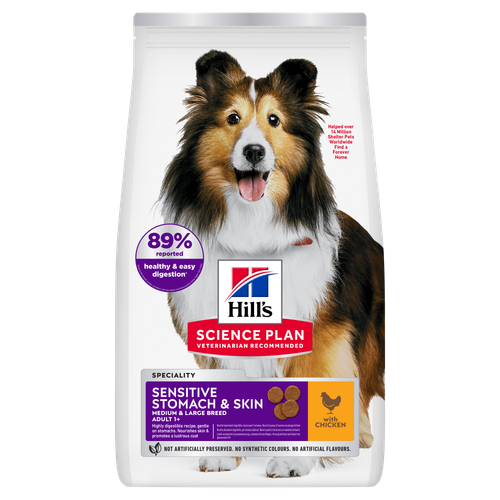
Sensitive Stomach & Skin - Croquettes pour Chien Adulte - Moyenne et Grande Race - au Poulet
Hill's Science Plan Sensitive Stomach & Skin pour Chiens adultes de races moyennes et grandes, au poulet, est un aliment complet destiné aux Chiens adultes de races moyennes et grandes âgés d'au moins 1 an.
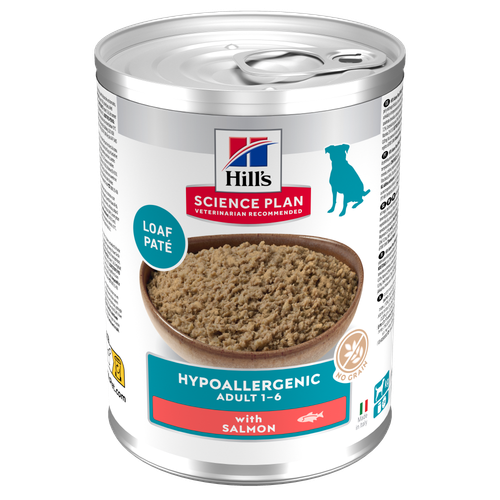
Hypoallergenic Pâté pour Chien Adulte au Saumon
Hill's Science Plan Hypoallergenic Adult, une nourriture humide au saumon, est un aliment complet destiné aux Chiens adultes âgés de 1 à 6 ans. Conçu pour les Chiens à la peau et à l'estomac sensibles, il contient une seule nouvelle source de protéines animales et ne contient pas de céréales.
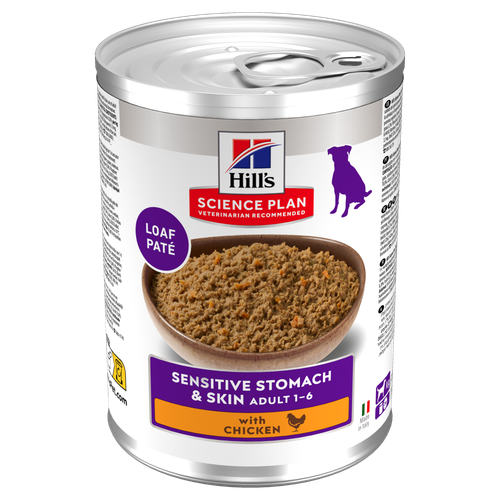
Sensitive Stomach & Skin Pâté pour Chien Moyenne et Grance Race Adulte au Poulet
Hill's Science Plan Sensitive Stomach & Skin, aliments humides au poulet, est un aliment complet destiné à favoriser une bonne digestion et une peau saine chez les Chiens adultes âgés de 1 à 6 ans.
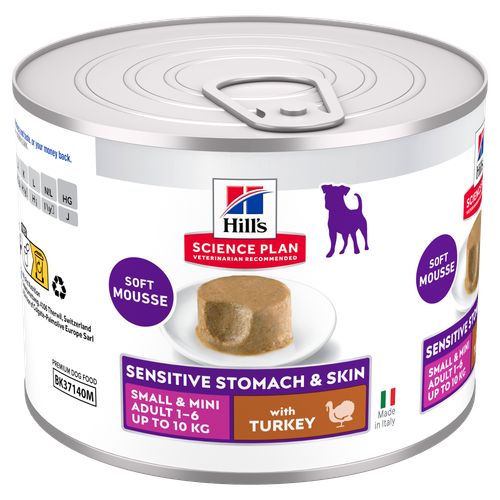
Sensitive Stomach & Skin Mousse pour Chien Petite Race Adulte à la Dinde
Hill's Science Plan Sensitive Stomach & Skin Small & Mini Adult Mousse à la dinde est un aliment complet destiné à favoriser une bonne digestion et une peau saine chez les Chiens adultes de petite taille âgés de 1 à 6 ans.
Articles Similaires

Qu'est-ce que le syndrome du petit chien?
Découvrez les causes du syndrome du petit chien et apprenez à prévenir les problèmes de comportement chez les petits chiens. Vous trouverez d'autres conseils sur la santé et le comportement canins sur Hill's Pet FR.

Soins dentaires pour chien : conseils et solutions pour des dents saines
Découvrez des astuces efficaces pour nettoyer les dents de votre chien ainsi que des conseils généraux pour préserver sa santé dentaire. Consultez le site Hill’s Pet FR pour obtenir des conseils d’experts.

La science derrière le chien et son comportement
Découvrez comment la science du chien nous permet de mieux comprendre le fonctionnement interne du meilleur ami de l’homme.

Vomissements et Diarrhée Chez le Chien : Quand Faut-Il s’Inquiéter et Que Faire ?
Votre chien vomit ou a la diarrhée ? Découvrez ce qui est normal, ce qui ne l’est pas et quand consulter grâce à ce guide destiné aux propriétaires et validé par des vétérinaires.

Mettez votre chien au régime sans qu'il le sache
Notre formule hypocalorique vous aide à contrôler le poids de votre chien. Riche en protéines de haute qualité pour développer une masse musculaire maigre, elle est élaborée avec des ingrédients ciblés pour un repas savoureux et nutritif. Des antioxydants cliniquement prouvés, comme les vitamines C et E, contribuent au bon fonctionnement du système immunitaire.
Mettez votre chien au régime sans qu'il le sache
Notre formule hypocalorique vous aide à contrôler le poids de votre chien. Riche en protéines de haute qualité pour développer une masse musculaire maigre, elle est élaborée avec des ingrédients ciblés pour un repas savoureux et nutritif. Des antioxydants cliniquement prouvés, comme les vitamines C et E, contribuent au bon fonctionnement du système immunitaire.